Review · LOS CABOS
Los Cabos: The Arch and Lover’s Beach Kayaking + Snorkeling
The best part of this 3.5-hour kayak trip is the close approach to The Arch. From a kayak, you see the granite formations at water level, not from behind a crowd on a larger boat. You also paddle past sea lions, stop at Lover’s Beach, and snorkel near Pelican Rock or Neptune’s Finger.
I like the easy-to-moderate pace and the guides’ calm support for first-time kayakers and snorkelers. I also like the practical extras: hotel pickup, snacks, water, dry bags, and photos taken during the outing. The main consideration is the sea. Pacific waves can block a landing at Lover’s Beach, and water clarity can change with weather and boat traffic.
Key points at a glance
- Kayak beneath The Arch: Paddle close to Cabo’s signature rock formation and see where the Sea of Cortez meets the Pacific Ocean.
- Watch sea lions at Land’s End: A colony often lounges on the rocks or swims near the kayaks.
- Walk at Lover’s Beach: Explore huge granite formations and look across to the rougher Divorce Beach.
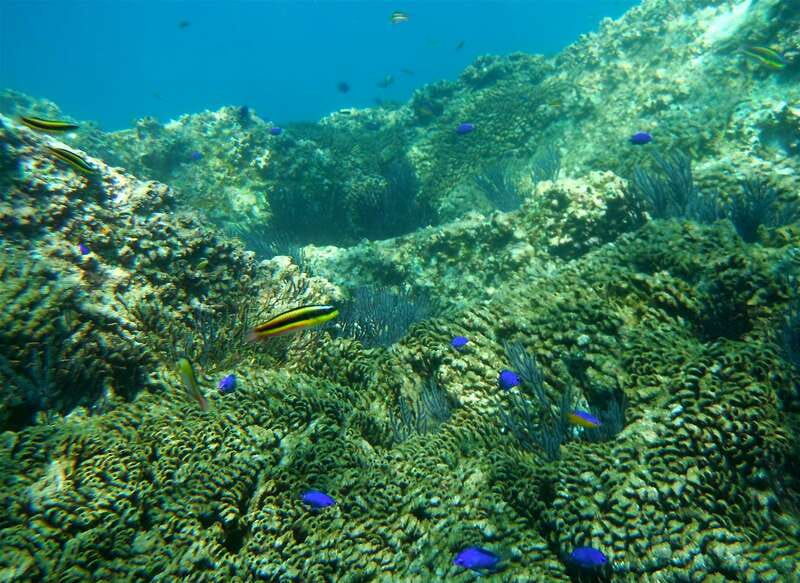
- Snorkel at Pelican Rock: Expect schools of tropical fish, with possible sightings of rays, eels, starfish, octopus, and pufferfish.
- Good for beginners: Guides including Casey and Carlos provide instruction and help with launching, landing, and snorkeling.
- Useful half-day format: Round-trip transport, equipment, drinks, snacks, and a shared dry bag are included for $102 per person.
Why kayaking is the right way to see The Arch
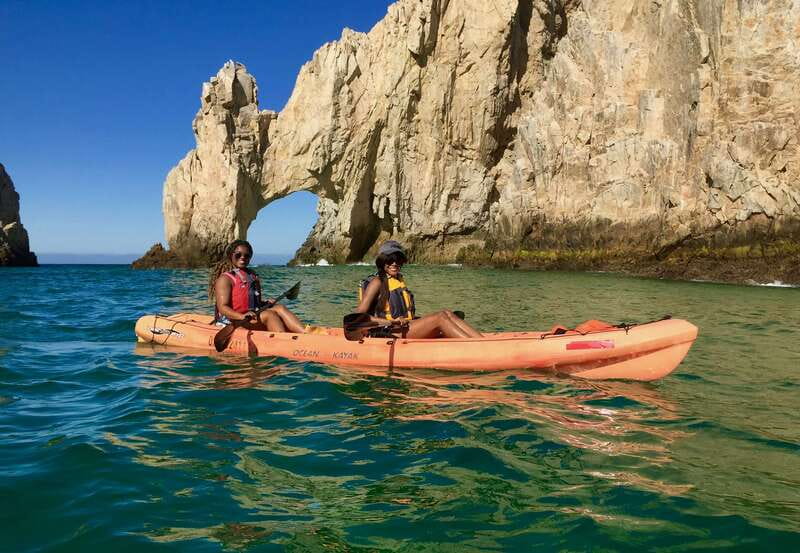
Cabo’s Arch, or El Arco, is the resort town’s most famous natural landmark. It is a huge granite formation at Land’s End, where the southern tip of the Baja Peninsula meets the Pacific Ocean and the Sea of Cortez.
Boat tours can give you a fine view, but a kayak changes the scale. You sit close to the water and paddle toward the rock rather than simply passing it. The smaller craft can also approach rocky coves and viewpoints that are less practical for larger boats.
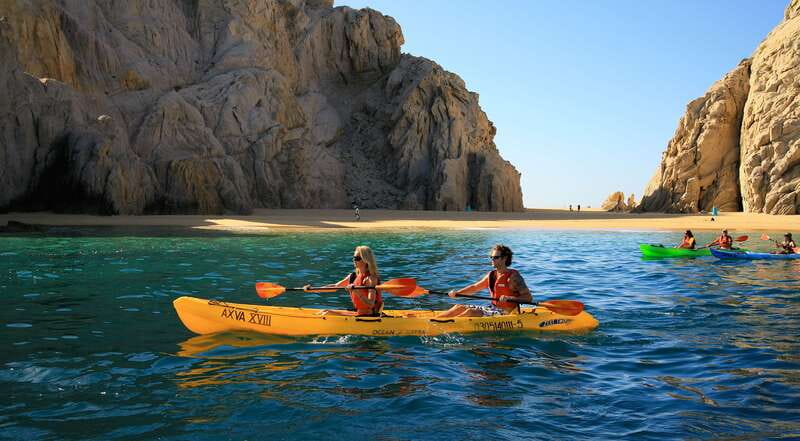
The route begins in the bay of Cabo San Lucas. After a short briefing, you and your partner use a sit-on-top double kayak. You do not need prior kayaking experience, and the guides explain basic strokes and safety before you leave the beach.
This is not a hard-core expedition. It is still exercise, especially if wind or chop picks up, but the activity is described as easy to moderate. Guides stay with the group and give clear directions about where to paddle. Casey, Carlos, Alex, and Luis are among the guides praised for patient instruction and steady supervision.
If you are new to kayaking, pay attention to the briefing and let your guide set the pace. The kayak is shared, so a little coordination with your partner helps. Keep your paddle strokes short and even rather than trying to overpower the water.
More Snorkeling and Kayaking Trips in Los Cabos
- Kayak Expedition to the Arch of Cabo San Lucas, Lovers Beach & Snorkel
★ 5.0 · 976 reviews - Los Cabos Power snorkel Adventure, Kayaking and Stand-Up Paddle
★ 4.5 · 872 reviews - Cabo San Lucas Glass Bottom Kayak Tour and Snorkel at Two Bays
★ 5.0 · 628 reviews
The paddle along Land’s End
The first stretch takes you along the rocky end of the peninsula. The views are the main event here: pale granite cliffs, blue water, passing boats, and the meeting point of two very different bodies of water.
The bay can feel calm, but conditions are not fixed. Wind, swell, and recent storms affect the route. A guide may change the landing plan or shorten part of the trip if the surf becomes unsafe. That is not a failure of the outing. It is the sensible choice at an exposed point where Pacific waves can be strong.
The guides also help you get in and out of the kayaks. This matters more than it sounds. Beach landings can be awkward, and a wave at the wrong moment can turn a simple step into a wet scramble. The staff’s help is especially useful for older adults, beginners, and anyone who is not confident in the water.
You may see pelicans, sea lions, and other marine life before reaching the snorkeling area. Some outings have included mobula rays, whales near Divorce Beach, flying manta rays, and even an octopus. None of these sightings can be promised, but the route gives you a good chance to see active marine life above and below the water.
The Arch from water level
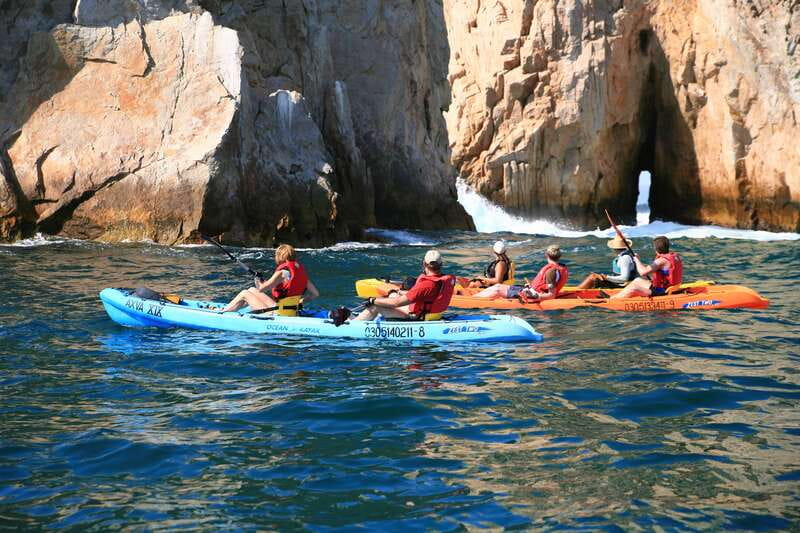
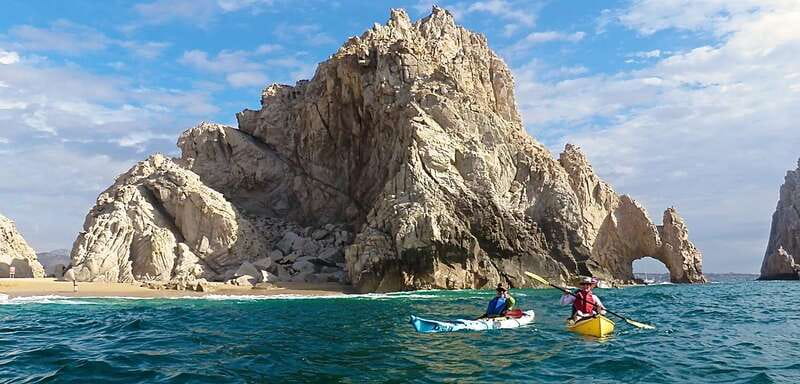
The approach to The Arch is the visual high point. The rock looks different from a kayak than it does from shore or a sightseeing boat. You can look up at the weathered granite, study the openings in the formation, and frame your own photographs from the water.
Guides often take group photos here, including shots of each kayak in front of The Arch. Photos have been shared at no extra cost, sometimes by AirDrop. That is a useful touch because handling a phone from a small kayak is not easy, and a waterproof case does not guarantee a good picture.
You should still bring sunglasses and sun protection. The water reflects the light, and there is little shade on this route. A hat, swimwear, towel, sunscreen, and beachwear belong in your day bag. A rash guard is also a sensible choice if you burn easily, though it is not listed as required equipment.
Do not expect to get out and walk through The Arch. The stop is for viewing and photographs from the water. The rock formations are striking enough without forcing the kayak into a dangerous opening or surf zone.
Lover’s Beach and the rough side of Cabo
Lover’s Beach is one of the most rewarding stops because you can get out of the kayak and explore on foot. Giant granite formations rise around the beach, creating a stark contrast between bare rock and clear water.
The beach sits between the calmer Sea of Cortez side and Divorce Beach on the Pacific side. You can often walk across to look at both shores, but the two sides are not equal for swimming. The Pacific side has stronger, crashing waves, and you should treat Divorce Beach as a place for views, not casual swimming.
This stop also gives your arms a break. The schedule blends paddling, beach time, and snorkeling rather than keeping you in the kayak for the entire morning. That makes the outing manageable for people who are active but not regular paddlers.
There is one important condition to understand. The group may not be able to land at Lover’s Beach if waves are too strong. On a recent storm-affected outing, the guide kept the group off the beach and adjusted the plan. You can still see the rock formations from the water, but the beach walk is not guaranteed.
More Snorkeling and Kayaking Trips in Mexico
- Cabo San Lucas Paddleboard and Snorkel at the Arch
★ 5.0 · 336 reviews - Los Cabos: Kayaking and Snorkeling in Two Pristine Bays
★ 4.9 · 64 reviews - Los Cabos: Kayak to The Arch & Snorkel + Transport & Photos
★ 4.9 · 35 reviews - Cabo san Lucas: Paddle Boarding or Kayak and Snorkeling
★ 5.0 · 17 reviews
Snorkeling near Pelican Rock
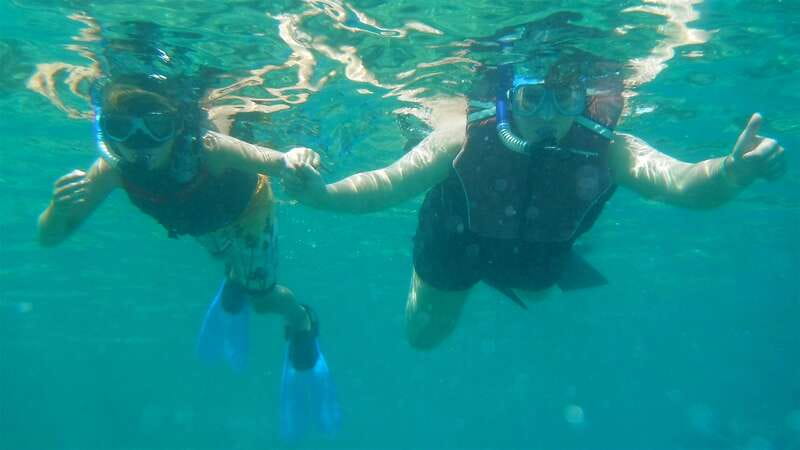
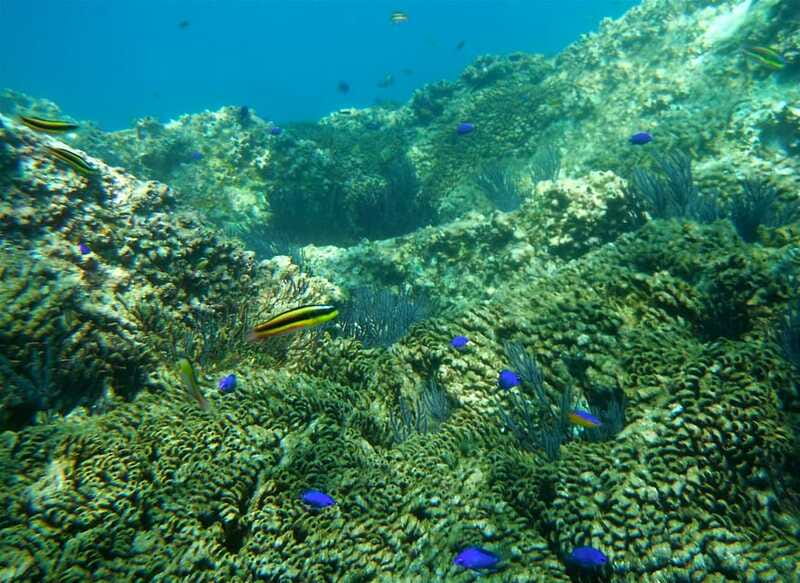
After Lover’s Beach, the group kayaks toward a snorkeling area. Depending on conditions, you may enter from the beach near Neptune’s Finger or slip into the water around Pelican Rock.
Pelican Rock is a popular spot for good reason. Its craggy underwater edges shelter schools of tropical fish, and the shallow water can make it approachable for beginners. Past sightings have included pufferfish, starfish, eels, rays, sea lions, and octopus.
The water is not always perfectly clear. Boat traffic and swimmers can stir up sand, especially in a busy area. On calm days, visibility has been excellent, with large numbers of fish easy to see. On other days, you may need to stay patient and keep your face in the water for a few moments before the view clears.
If you have never snorkeled, tell your guide before entering. Carlos and other guides have helped beginners get comfortable, pointed out fish, and stayed close while people learned to breathe through the mask. You receive a mask, snorkel, and fins, but you should bring your own comfort level and avoid rushing.
Water temperature can vary by season. One winter outing found the water cold enough that a wetsuit would have helped. Wetsuits are not listed among the included equipment, so ask the operator about conditions if you are sensitive to cold.
Sea lions, pelicans, and the living shoreline
The sea lion colony is one of the most memorable parts of the route. You paddle past rocks where sea lions rest, then may see them slipping into the water or swimming near the kayaks.
The kayak gives you a quieter, lower viewpoint than a motorboat. You are close enough to see the animals clearly, but your guide should control the distance and route. Do not paddle toward wildlife on your own or try to touch it.
Pelicans are also common around the rock formations. Their large wings and awkward beach manners add a bit of character to the scenery. If you are lucky, you might see rays gliding below the surface or a whale offshore during the cooler months, but wildlife sightings remain a bonus rather than a guarantee.
What is included for $102
At $102 per person, the trip offers solid value for a half-day outing. The price includes round-trip transportation, an experienced guide, a double kayak, kayaking equipment, snorkeling gear, drinks, snacks, and a shared dry bag for small valuables.
The included transport is particularly helpful if you are staying in San José del Cabo. The drive to Cabo San Lucas adds convenience and removes the need to arrange a taxi or navigate to the marina. Pickup is also available from accommodations in Cabo San Lucas.
The van ride can add a little local context. Casey has pointed out neighborhoods and resorts along the way and offered suggestions for places to eat and drink. That is a pleasant extra, though the real value is simply getting to the beach without transportation hassle.
Lunch is not included. Since the activity lasts about three and a half hours, you can usually plan a meal before or after, but bring a small snack if you need more than the provided refreshments. The included snacks and drinks cover the basic need during the paddle and snorkel.
Group size can vary. Some outings have had only a few people, while others included several families or small groups. A smaller group generally means more individual help and less crowding around the snorkeling area, but the operator does not promise a fixed group size.
The guide support makes a difference
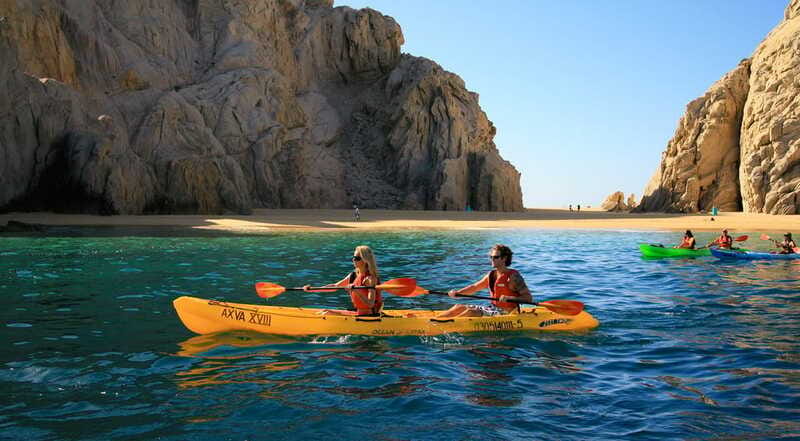
The strongest part of this experience is the hands-on guiding. Casey, Carlos, Alex, Luis, and other staff members have handled pickup, equipment setup, kayak instruction, beach landings, photographs, and fish identification.
That matters because this is not just a rental. You are not handed a kayak and sent toward The Arch alone. The guide tells you where to paddle, watches the group, checks the water, and adjusts the plan when conditions change.
First-time kayakers have been able to take part with help from the guides. First-time snorkelers have also received patient instruction. Older adults and families with children have found the pace manageable, provided everyone meets the age and mobility requirements.
The guide’s judgment is most important near Divorce Beach and during landings. The Pacific side can have rough surf, and a beach that looks inviting from the kayak may not be safe for stepping ashore. Listen when the guide says to stay in the water or change the route.
Who should book this outing?
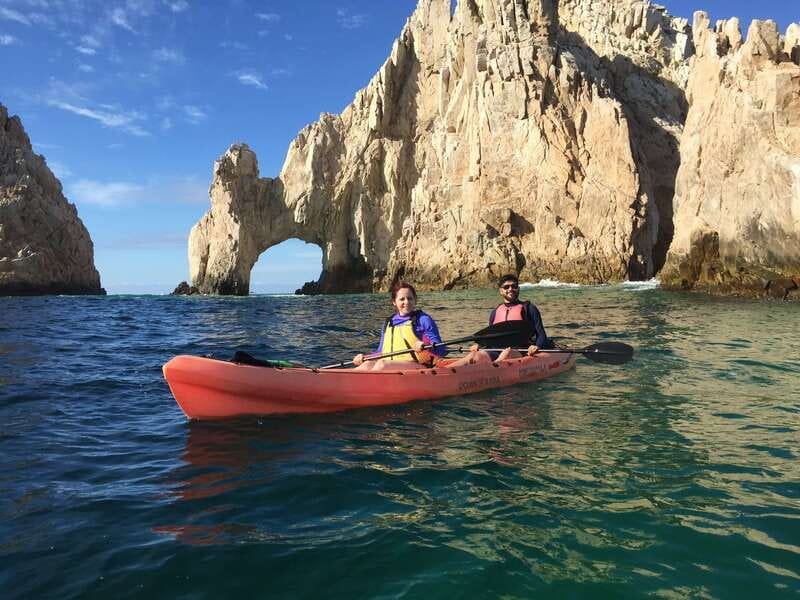
This tour suits you if you want Cabo’s major coastal sights without spending the whole day on a large boat. It is a good match for couples, families with children age seven and older, first-time kayakers, and anyone who wants a mix of scenery, light exercise, beach time, and snorkeling.
It also works well if you have only half a day in Cabo. One family fit the activity into a short visit before catching a ferry, then had time for lunch afterward.
You should be comfortable with some physical activity and getting wet. The tour is not recommended for people with limited mobility, and the maximum weight is 275 pounds, or 125 kilograms. Children under seven cannot join.
This is not the best choice if you want a guaranteed long beach stay, perfectly clear water, or a completely dry sightseeing trip. Weather and surf can change the route, and snorkeling conditions can be less clear when the area is crowded.
Practical tips for a smoother morning
Arrange pickup with the local operator after booking and be ready at least 10 minutes before the pickup time. The instructions also ask you to arrive at the meeting point 15 minutes before the designated pickup time, so build in a little margin.
Wear swimwear and bring a towel, sunglasses, a sun hat, sunscreen, and beachwear. A long-sleeved sun shirt or rash guard is useful in the strong reflected light, especially if you burn easily.
Use the shared dry bag for small valuables, but do not bring more than you need. Keep phones and cameras protected, and ask the guide before taking them out on the kayak.
The tour is offered in English and Spanish. Free cancellation is available up to 24 hours before the activity, and you can reserve now and pay later. Check the available start times because morning departures can offer a less crowded approach to The Arch and a calmer snorkeling session, though no time guarantees ideal conditions.
Should you book the Arch and Lover’s Beach kayak tour?
I would book this if you want a close, active look at Cabo’s coast and value good support more than luxury. The combination is hard to beat: The Arch from a kayak, a sea lion colony, a walk at Lover’s Beach, and snorkeling among tropical fish, all in one half-day.
The $102 price is fair because transport, equipment, guides, snacks, drinks, and photos are included. Just keep your expectations flexible. Lover’s Beach may be skipped if surf is rough, water clarity can change, and the Pacific side is not a swimming beach.
For beginners, families, and couples who want more than a boat ride, this is one of the better-balanced ways to see Land’s End.
FAQ
How long does the kayaking and snorkeling tour last?
The experience lasts about 3.5 hours, including kayaking, beach time, snorkeling, and the return trip.
What does the tour cost?
The listed price is $102 per person.
Is hotel pickup included?
Yes. Round-trip transportation is included from accommodations in San José del Cabo or Cabo San Lucas. Contact the local operator after booking to arrange the pickup.
Do I need kayaking experience?
No. The activity is suitable for beginners, and the guide provides a short kayaking and safety briefing before you enter the water.
What equipment is provided?
You receive a sit-on-top double kayak and kayaking gear, plus a mask, snorkel, and fins. A shared dry bag is available for small valuables.
Is snorkeling included?
Yes. Snorkeling is part of the experience, usually around Pelican Rock or near Neptune’s Finger, depending on conditions.
Can children join the tour?
Children must be at least seven years old. The tour is not suitable for children under seven.
Is the tour suitable for people with limited mobility?
No. The activity is not recommended for people with mobility impairments. It also has a maximum weight limit of 275 pounds, or 125 kilograms.
What should I bring?
Bring sunglasses, a sun hat, swimwear, a towel, sunscreen, and beachwear. A rash guard can also help protect you from the sun, especially if you burn easily.
New snorkel trips around Los Cabos
- Los Cabos: Kayaking and Snorkeling in Two Pristine Bays★ 4.9 · 64 reviews
- los cabos arch tour & drinks +snorkel tour★ 4.6 · 11 reviews
- Los Cabos Arch & Lover’s Beach Tour + Snorkeling Tour★ 4.9 · 283 reviews
- Half Day Guided Snorkel Tour in Los Cabos★ 4.4 · 14 reviews
- Cabo: Half-Day Kayak & Snorkel to Santa Maria & Chileno Bay★ 3.8 · 13 reviews
- Los Cabos: Snorkeling Cruise with Lunch★ 3.8 · 17 reviews
- Cabo San Lucas: Snorkel, Lunch and Sail Experience★ 4.0 · 19 reviews
- Cabo Catamaran Snorkel: Arch & Santa Maria, Open Bar, Snacks★ 4.3 · 95 reviews
Los Cabos Snorkeling Tours, side by side.
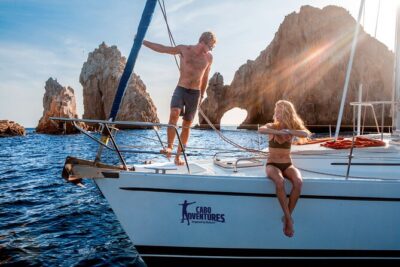
Los Cabos Luxury Sailing, Snorkel and Lunch Cruise
Read our review →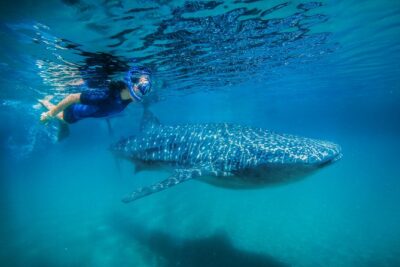
La Paz Whale Shark Snorkeling Tour and Lunch From Los Cabos
Read our review →
Kayak Expedition to the Arch of Cabo San Lucas, Lovers Beach & Snorkel
Read our review →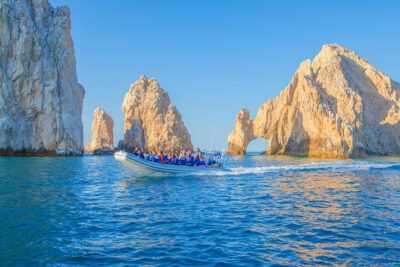
Los Cabos Power snorkel Adventure, Kayaking and Stand-Up Paddle
Read our review →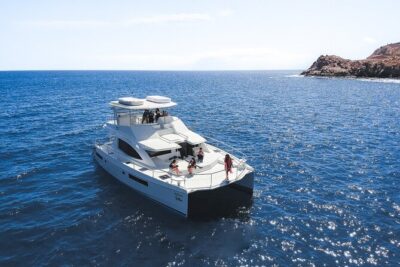
Half Day Cabo Snorkel Adventure with Lunch and Open Bar
Read our review →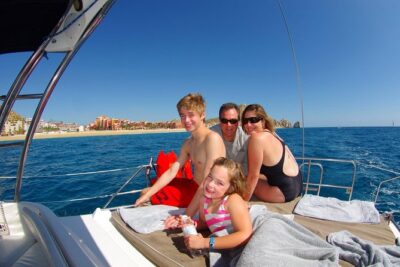
Lands End Luxury Sail and Snorkel Cruise in Cabo San Lucas
Read our review →
Cabo Blue Snorkeling Cruise, Open Bar and Lunch in Cabo San Lucas
Read our review →