
Review · BIG ISLAND
Manta Ray Snorkel in Kailua-Kona with Hot Cocoa
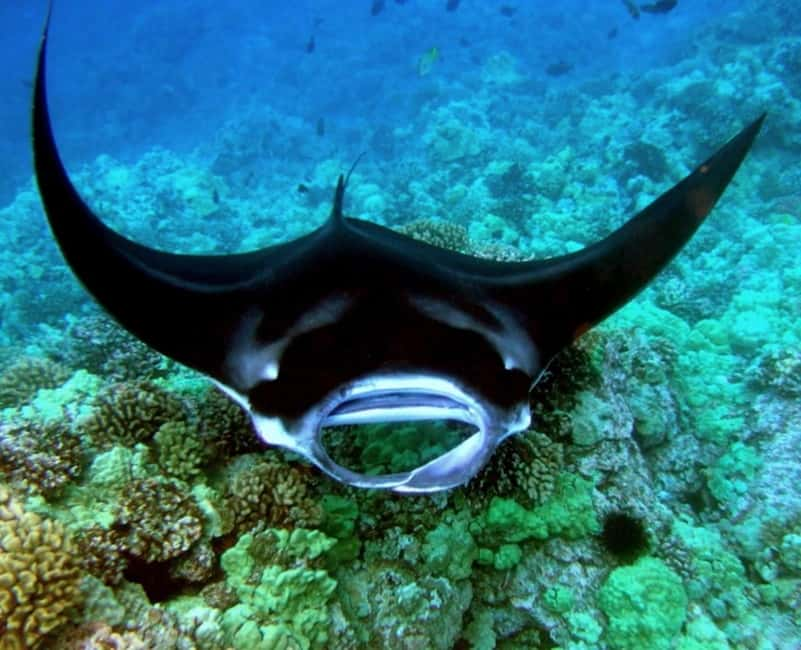
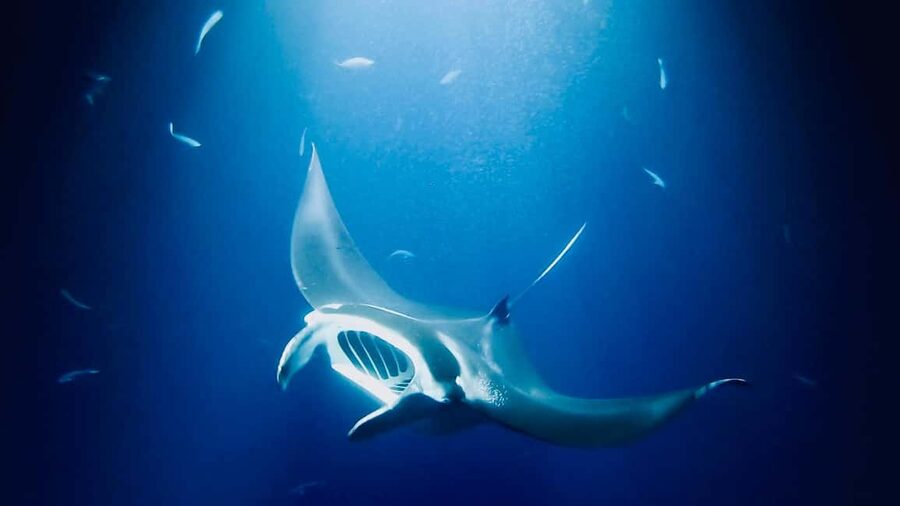
The best part of this Kailua-Kona outing happens after dark, when underwater lights draw plankton and manta rays glide beneath your face. You stay at the surface on a lighted raft while the animals make graceful barrel rolls below. Some can reach wingspans of 14 feet, yet they are gentle filter feeders.
I like the small-group format and the careful crew support, especially for children and first-time snorkelers. I also like the simple finish: hot cocoa, tea, snacks, and moonlit water on the way back. The catch is that this is still the Pacific Ocean, so motion sickness, cold water, and rough texture can affect your comfort, and wild manta sightings are never guaranteed.
Key points to know before booking
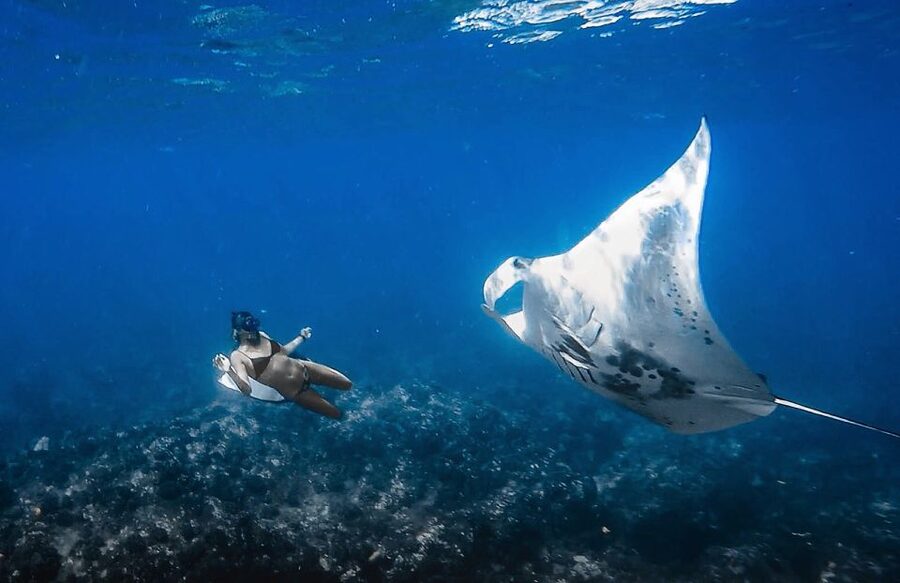
- Manta Ray Heaven is reached by speedboat: The site is only accessible by boat and uses submerged lights to gather plankton and manta rays.
- You float at the surface: This is an easy snorkel, not a technical swim, with a raft, optional flotation support, and in-water guides.
- The water portion lasts up to 45 minutes: The whole experience takes about two hours, including the harbor briefing and boat ride.
- Hot cocoa comes after the swim: Bring a towel and consider a sweatshirt or wetsuit if you get cold easily.
- Sunset and moonlight departures feel different: The early trip includes sunset, while the later departure offers a darker, starry ride back.
- Manta sightings are not promised: If no manta rays appear, Iruka Hawaii offers a place on the next available tour at no extra charge.
Why Kona’s night manta snorkel is so special
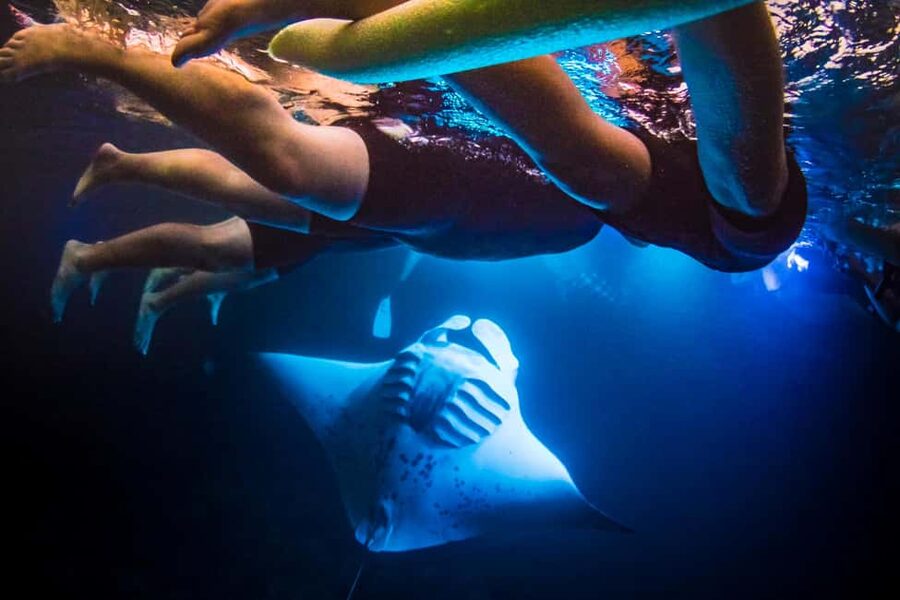
Kona has one of the few places where you can reliably watch manta rays feed at night from the surface. The animals are drawn to plankton, and submerged lights called campfires make that food easier to gather near the raft.
You are not chasing the mantas or swimming after them. You hold onto the floating platform and look down as they pass through the light. Their wide wings fold and roll with surprising grace, and one may sweep close enough for you to see its shape clearly beneath the water.
That setup matters. You get a close animal encounter without touching or feeding the rays. The guides also stress respectful behavior, which helps protect the animals and keeps the experience calm. The sight can feel almost silent, with only your breathing, the water, and the movement of the rays below.
The largest manta rays seen here can have wingspans of about 14 feet. They look imposing, but they are harmless filter feeders. You should never try to touch them, and you will get the best view by staying still and following the crew’s instructions.
More whale shark and manta ray swims around Big Island:
- Big Island Manta Ray Night Snorkel
★ 5.0 · 5,656 reviews - Big Island: Kona Manta Ray Snorkel Tour in Keauhou Harbor
★ 4.5 · 2,465 reviews - KONA Manta Ray Night Snorkel – FREE re-ride if no Sightings
★ 5.0 · 2,212 reviews
Leaving Honokohau Harbor before sunset
The meeting point is Iruka Hawaii Dolphin and Manta Tours at Slip A17 in Honokohau Harbor, about five minutes north of Kailua-Kona. Parking is free, which removes one small hassle from an evening activity.
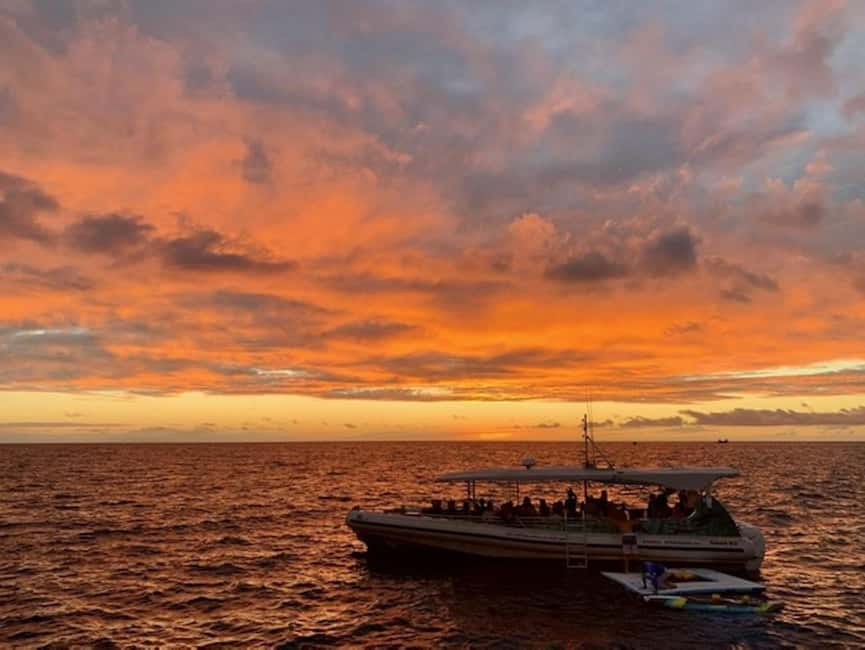
The boat, KIBOU, is a speedboat built for the short coastal run to the snorkel site. You board before sunset for the early departure or choose a later moonlight departure. The sunset option gives you changing colors over the coast, while the later trip puts more attention on the night sky and the dark ocean.
Before leaving, you complete a safety waiver and receive an orientation. Pay close attention here. The crew explains how to use the mask and snorkel, how to hold the raft, and how to move around the manta rays without disturbing them.
The ride out also gives the guides time to explain manta behavior and local ocean ecology. Crew members named on recent departures include Trevor, Diego, Amy, Mitch, Bryce, Scott, Lena, Madi, and Tamae. The exact team can change, but the important point is that the in-water staff are lifeguard-certified and stay focused on comfort and safety.
The ride is part of the experience, not just transport. It can be smooth, but the Pacific has movement. If you are prone to seasickness, take your medication about an hour before departure, as advised by the operator. That matters most for the boat ride and for floating at the snorkel site, where a gentle swell can feel stronger than it looks from shore.
Getting comfortable with the mask and open water
You do not need strong snorkeling skills for this trip. New swimmers receive tips on breathing through the mask and getting used to the gear before entering the water.
Once you are in, you mainly float face down and watch. A snorkel vest is available, and a pool noodle can help keep your legs up. Those small aids make a big difference if you feel anxious in open water or have not snorkeled before.
The guides are especially attentive to families. A three-year-old and a six-year-old were able to see the manta rays with crew support, showing how much the staff can adapt for children. Still, age alone does not determine comfort. You should consider how your child handles darkness, a boat ride, cool water, and wearing a mask.
People who get cold easily should take the cold seriously. A wetsuit costs $10 for adults and $5 for children. One family found the rental worthwhile, while others wished they had used one. You can also bring a towel and a sweatshirt for the ride home.
The raft gives you a stable place to hold on, but this is not a pool. You remain in the ocean, and the water can have texture. If you are nervous, tell the crew before entering. Their job is to help you get set up correctly and keep watch while you are in the water.
Watching manta rays under the campfire lights
At Manta Ray Heaven, the boat positions near the floating light raft. The lights shine down into the water and attract plankton. The manta rays follow the food source, sometimes appearing one at a time and sometimes in a group.
You can spend up to 45 minutes in the water. That is plenty of time to settle your breathing, find a comfortable position, and watch the rays work. A typical sight may include several rays, while some outings see around ten or more. Nature decides the exact number and how close they come.
The most striking behavior is the barrel roll. A manta rises toward the light, curves its body, and turns through the plankton before gliding away. You may see one roll several times in front of the raft, or several rays pass below in succession.
Do not expect every moment to be filled with action. The best approach is to keep your face in the water and wait. The guides point out what is happening and help you maintain a safe position. You should not reach toward a ray, kick after one, or block its path.
Because you are holding on to the raft, taking your own photos can be awkward. You need both hands for comfort and stability, and the light, water, and movement make phone photography difficult. A crew member may take photos or video and share them afterward through AirDrop, as Tamae has done on past departures. That is a useful extra, but you should not book on the assumption that personal media is guaranteed.
Some people describe the animals as coming very close, even within a few feet. That can be thrilling, but remember that the manta controls the distance. The respectful choice is to let it pass beneath you without trying to make contact.
More snorkeling tours around Big Island:
- Big Island: Captain Cook Snorkel On A Power Catamaran With Lunch
★ 5.0 · 2,232 reviews - Manta Ray Night Snorkel at Kona, Big Island
★ 5.0 · 1,758 reviews - Kona Snorkel Tour: Captain Cook Reef Snorkel, Dolphin & Sea Caves
★ 4.5 · 1,411 reviews - Glow of the Deep: Night Snorkeling with Manta Rays
★ 4.5 · 1,254 reviews
The ride home, hot cocoa, and a cold-water reality check
After the water session, you return to KIBOU. The crew serves hot cocoa, tea, light snacks, and bottled water. The warm drink is a welcome touch after standing or floating in cool ocean water, though the serving may be modest. If cocoa is the main reason you are choosing this trip, keep your expectations realistic.
The boat ride back under the stars gives everyone time to warm up and talk. You may bring your own food and drinks, and alcohol is allowed only after snorkeling. Glass bottles are not permitted. Bathrooms are available on board, which is useful during a two-hour outing.
Bring swimwear and a towel. I would add a sweatshirt, especially for the return ride, and consider the wetsuit rental if you get cold quickly. The ride home may feel less chilly than expected, but wet skin and wind can change that fast.
The snacks are light rather than a meal. Eat beforehand if you need a full dinner, particularly if you are traveling with children. The operator allows additional food and non-glass beverages, so you can plan around your own needs.
Is $125 a fair price?
At $125 per person, this is not a cheap evening activity. You are paying for a boat ride, snorkel gear, a prepared light raft, lifeguard-certified in-water staff, safety instruction, and up to 45 minutes at the manta site.
The value depends on what you want. If you only want a quick swim in the ocean, the price is high. If you want a guided nighttime animal encounter with equipment and close crew support, it is easier to justify. You avoid arranging separate gear, finding a site, or trying to judge ocean conditions yourself.
The small-group approach also adds value. It gives the crew more ability to help with masks, flotation, children, and nervous swimmers. That personal attention is more important here than it would be on a simple daytime boat ride.
Still, the price cannot buy a guaranteed wildlife show. Manta rays are wild, and conditions can change. If no rays are seen, Iruka Hawaii offers another tour on the next available date at no extra cost. That helps, but it may not solve the problem if your schedule is tight.
You should also budget for a wetsuit if needed, transportation if you choose the sunset tour and require pickup, and an optional crew gratuity. Transportation to and from the harbor is not included for the sunset departure and costs extra. The later moonlight departure may be simpler if you are already staying near Kona and can reach the harbor yourself.
Sunset or moonlight departure?
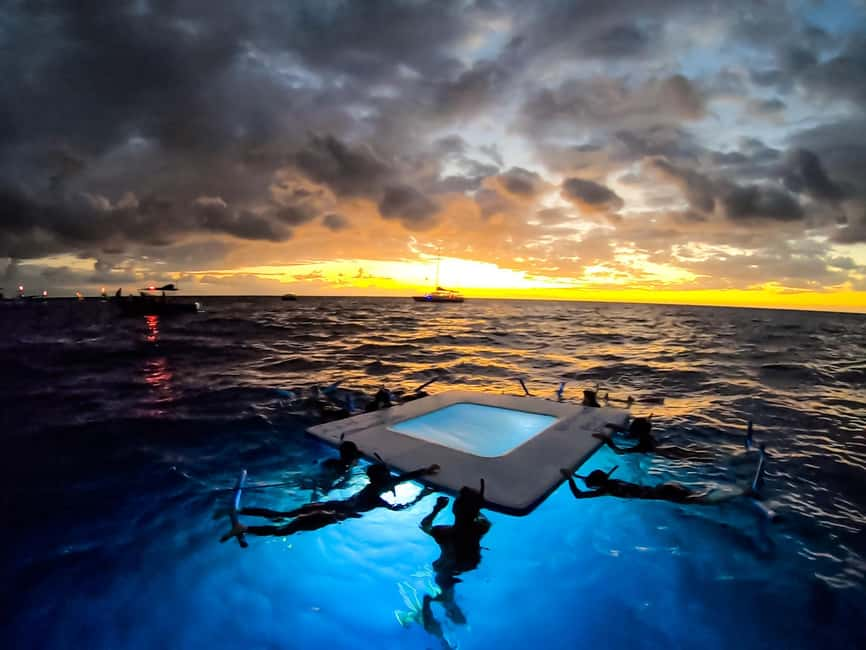
Choose the sunset option if you want the full visual sequence: harbor departure, fading daylight, a changing sky, and a night snorkel. The early departure requires you to select the early time and contact the operator about transportation details.
Choose the later moonlight option if the manta encounter is your main goal and you like the idea of returning beneath the moon and stars. The water is darker, which can make the campfire lights feel more dramatic.
Neither option guarantees better manta activity. The choice is mainly about the mood and your schedule. Families may prefer the earlier start, while adults who want a quieter night could enjoy the later ride.
Who will enjoy this most?
This is a strong choice for first-time snorkelers, families, and anyone who wants help in the water. The crew can provide a mask briefing, flotation support, and close supervision. Children and grandparents can take part if they are comfortable with the boat, the ocean, and the equipment.
It also suits people who want an animal experience without scuba certification. You remain on the surface and watch the rays from above. You do not need to chase them, touch them, or swim far from the raft.
It may be a poor fit if you have severe motion sickness, dislike open water, or get cold easily without planning ahead. Take sea sickness medicine in advance, rent a wetsuit, and tell the staff about your concerns.
There is conflicting information about accessibility. The activity details describe the experience as wheelchair accessible, but the restrictions also say it is not suitable for wheelchair users or people with mobility impairments. Confirm directly with Iruka Hawaii before paying if accessibility affects your decision.
Practical details that make the evening easier
Plan to arrive at Slip A17 with enough time to park, complete the waiver, and listen to the safety briefing. Wear swimwear under your clothes and bring a towel. A sweatshirt is a smart extra.
Do not bring glass objects. You may bring food and beverages, but alcohol must wait until after the swim. The boat has bathrooms, snorkel equipment, bottled water, tea, snacks, and hot cocoa.
Cancellation is flexible: you can cancel up to 24 hours before departure for a full refund. You can also reserve now and pay later, which helps if your Big Island plans are still shifting.
The tour lasts about two hours, and the live guide speaks English. The exact start time changes by date, so check availability when booking.
Should you book this manta ray snorkel?
Book it if you want one of the Big Island’s most memorable wildlife encounters and you are willing to accept a real ocean outing rather than a controlled attraction. The manta rays can be breathtakingly close, and the guides provide the calm support that makes the experience work for beginners.
I would especially choose it for families, nervous snorkelers, and people who value a smaller group and strong safety focus. Bring a towel, plan for cold, take motion sickness medication if needed, and understand that sightings are never guaranteed.
Skip it if you cannot tolerate boat motion or open water, or if you need fully confirmed wheelchair access. For everyone else, $125 is a fair price for the boat, gear, instruction, staff support, and rare chance to watch giant manta rays feeding beneath the night lights.
FAQ
How long does the manta ray snorkel take?
The full experience lasts about two hours. The time in the water can last up to 45 minutes.
Where does the tour meet?
Meet at Iruka Hawaii Dolphin and Manta Tours at Slip A17 in Honokohau Harbor, about five minutes north of Kailua-Kona. Free parking is available.
Do I need snorkeling experience?
No. The outing is designed for first-time snorkelers and all skill levels. The crew explains the equipment and helps you get comfortable before entering the water.
Are manta ray sightings guaranteed?
No. Manta rays are wild animals, so sightings cannot be guaranteed. If none appear, Iruka Hawaii offers a place on the next available tour at no extra cost.
What is included after snorkeling?
The boat provides hot cocoa, tea, light snacks, and bottled water after the swim. Bathrooms are also available on board.
Can I rent a wetsuit?
Yes. Wetsuit rental costs $10 for adults and $5 for children. You should also bring a towel and may want a sweatshirt for the ride back.
Can I choose a sunset or moonlight tour?
Yes. Select the early departure for the sunset tour or the later departure for the moonlight tour. For the sunset option, contact the operator about transportation details because pickup costs extra.
New snorkel trips around Big Island
- Kona Turtle Snorkel Sail with Lunch and Drinks★ 4.9 · 19 reviews
- Big Island: Kona Half-Day Boat Tour with Snorkeling & Lunch★ 5.0 · 34 reviews
- Hilo: Sea Turtle Lagoon and Black Sand Beach Snorkel★ 4.5 · 119 reviews
- From Keauhou Bay: Snorkel Cruise to Captain Cook’s Monument★ 4.8 · 242 reviews
- Dolphin Watch Snorkel and BBQ in Kona, Big Island★ 4.3 · 21 reviews
- Big Island: Morning Snorkel Sail to Captain Cook’s Monument★ 4.9 · 49 reviews
- From Hawaii: Eco-Friendly Snorkeling Experience with BBQ★ 4.8 · 151 reviews
- Big Island: South Kona Snorkeling and Coastline Exploration★ 5.0 · 94 reviews
Big Island Snorkeling Tours, side by side.
Big Island: Kona Manta Ray Snorkel Tour in Keauhou Harbor
Read our review →
Big Island: Captain Cook Snorkel On A Power Catamaran With Lunch
Read our review →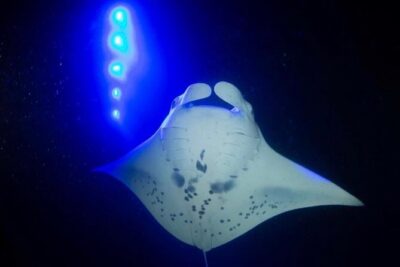
KONA Manta Ray Night Snorkel – FREE re-ride if no Sightings
Read our review →
Kona Snorkel Tour: Captain Cook Reef Snorkel, Dolphin & Sea Caves
Read our review →
Glow of the Deep: Night Snorkeling with Manta Rays
Read our review →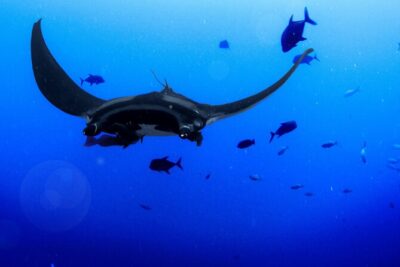
Manta Magic: Small-Group Manta Ray Night Snorkel in Kailua Kona
Read our review →
Kona’s Best Morning Snorkel: Captain Cook & Kealakekua Bay
Read our review →Lists this trip appears on