
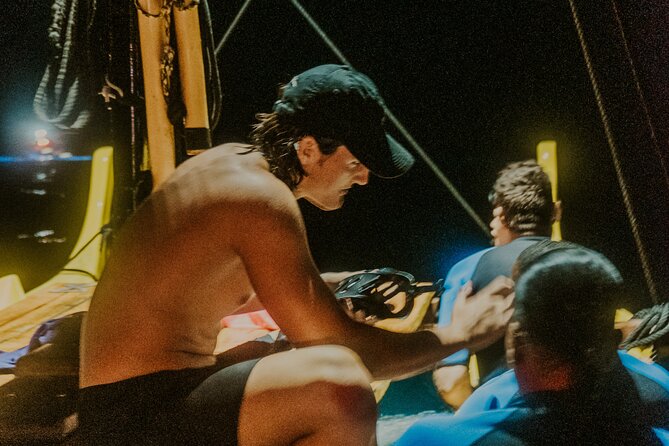
Review · BIG ISLAND
Manta Ray Snorkeling by Night in Kailua-Kona, Hawaii
Seeing a manta ray glide within inches of you is the main event here. These wild animals sweep through the illuminated water to feed on plankton, turning a short night snorkel into one of Kona’s most unusual ocean experiences. I like the small group of 12 or fewer and the quiet, traditional canoe ride rather than a crowded boat.
I also like that the trip keeps its focus: a short ride out, roughly 45 minutes or more in the water, then back to shore. The tradeoff is price and uncertainty. At $127.10 per person, this is not a cheap hour, and wild rays can choose not to appear. A return opportunity is offered if that happens, but there is no refund simply because the animals take the night off.
Key points at a glance
- Wild manta rays at night: You watch untrained, unfed rays feed naturally on plankton under lights.
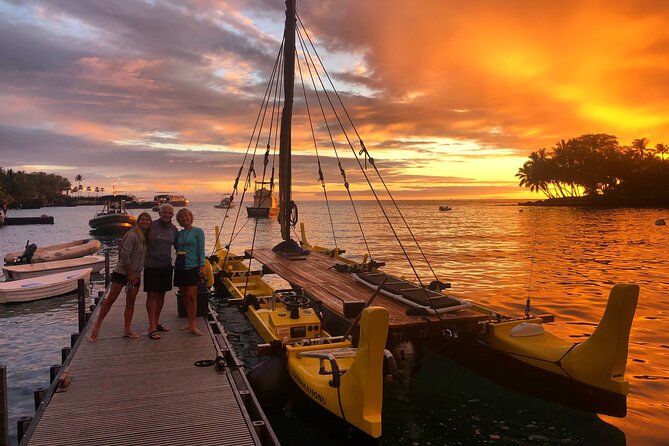
- Small Hawaiian canoe: The historically accurate double-hulled canoe carries no more than 12 people.
- Short ride to the site: The canoe reaches the manta area within a few minutes, leaving more energy for the water.
- Lighted float boards: Purpose-built blue lights gather plankton, which draws the rays close to the surface.
- Warmth and equipment included: You receive a wetsuit top, flotation device, and normal or prescription snorkel gear.
- Manta guarantee: If no manta appears, you can try again on another evening, subject to available seats.
Why Kona’s night manta encounter feels different
Kona is one of the few places where you can reliably have a close look at manta rays in the wild. The rays are not fed, trained, or handled. Instead, lights shine into the water and gather plankton, their natural food, near the surface.
That distinction matters. You are not visiting an aquarium or a controlled animal attraction. The creatures decide how close they come and how long they stay. Some nights bring a busy swirl of rays. On another evening, you might see fewer, or none at all.
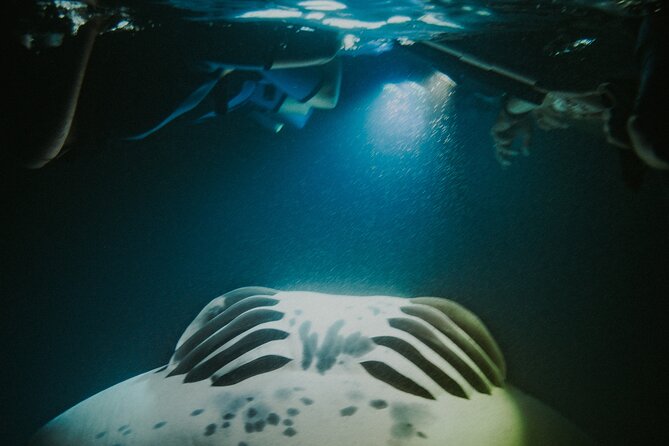
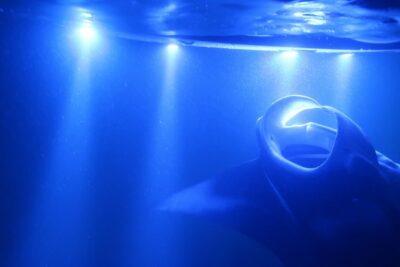
The scene is simple but memorable. You hold onto a lighted float while looking down into dark water. Manta rays circle, roll, and sweep their broad wings through the plankton. Their size can surprise you, especially when one passes just inches away.
The activity is snorkeling rather than scuba diving, so you do not need a tank or special certification. You do need basic swimming skills and enough comfort in the water to hold onto the float and climb a short ladder without help.
More whale shark and manta ray swims around Big Island:
- Big Island Manta Ray Night Snorkel
★ 5.0 · 5,656 reviews - Big Island: Kona Manta Ray Snorkel Tour in Keauhou Harbor
★ 4.5 · 2,465 reviews - KONA Manta Ray Night Snorkel – FREE re-ride if no Sightings
★ 5.0 · 2,212 reviews
The canoe ride from Kailua-Kona
You meet the crew and your group at 78-7130 Kaleiopapa Street in Kailua-Kona. The activity begins and ends at this point, and there is no private transportation included. The location is near public transportation, but you should pay close attention to the day-of text message, which includes parking and check-in instructions with pictures.
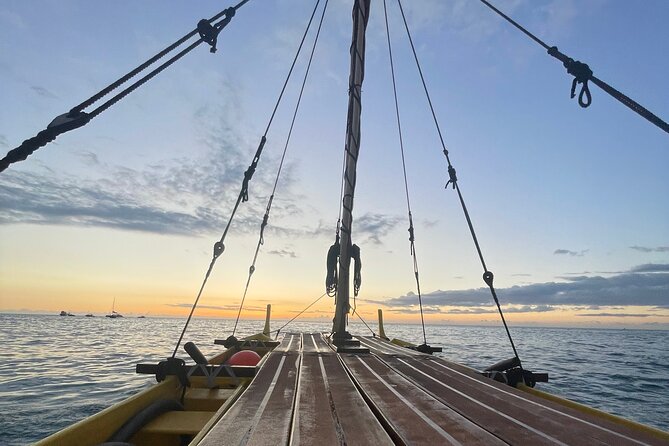
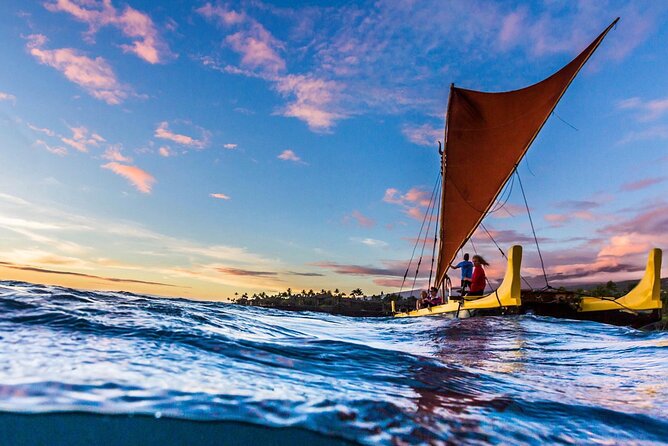
The boat is part of the appeal. Eka Canoe Adventures uses a historically accurate Hawaiian double-hulled sailing canoe rather than a large excursion boat. The ride to the manta site takes only a few minutes, according to the information provided, so this is not a long cruise. That works in your favor if you mainly want time with the rays.
The canoe can carry up to 12 people, a useful limit in an activity where space and attention matter. With a smaller group, you have a better chance of getting help when you need it, and the water guide can keep an eye on everyone more easily.
A few published accounts describe three guides on board for a group of 12. Names attached to especially praised trips include Ni’Koa, Kalala, Lance, Chaden, Beck, Tayler, Rob, Kama, and Chris. Crew assignments can change, so do not assume a particular person will be working your departure. The consistent point is that the crew handles boarding, water entry, and reboarding with close attention.
Preparing for the water
You receive a wetsuit top for warmth, flotation equipment, and snorkel gear. Normal and prescription snorkel masks are available, which is a helpful detail if you need vision correction. You provide your own towel, snacks, drinks, and any motion sickness medicine.
The water can feel chilly, even with the wetsuit top. One useful practical tip is to bring a dry towel for the ride back and after you return to shore. Coffee, tea, and snacks are not included, so eat before the tour if you know you get hungry after swimming.
The booking process asks for your height and weight so the operator can select the right wetsuit top. You are not simply choosing a shirt size. That may seem fussy, but a proper fit matters when you are floating at night and trying to stay comfortable.
You should also tell the crew about concerns before entering the water. Some people arrive nervous about the transfer from canoe to float. The staff can offer encouragement and assistance, but you must be able to swim and climb the short ladder unassisted.
This is not a good fit after recent surgery or for someone with significant mobility or physical restrictions. The minimum age is five, though age alone does not replace the swimming and ladder requirements.
Entering the dark water
At the manta site, you put on the rest of your gear and enter the water near the lighted float. Based on the supplied trip details, the board is brought within roughly three or four feet of the canoe, and you enter with a pool float. That short gap is reassuring if you are uneasy about jumping into open water.
Once you reach the float, you hold on and look into the illuminated water. The lights attract plankton, and the plankton attracts the rays. You are not chasing the animals, touching them, or swimming after them. The best approach is to stay calm, keep your body near the float, and let the rays make the encounter on their terms.
The actual water time is typically 45 minutes or more within a tour lasting about an hour to an hour and 15 minutes. Exact timing can vary, but this is a focused outing rather than a long evening cruise.
The float can become tiring. One person found that holding the light board for an extended period was hard, even though the manta activity eventually became excellent. If your arms fatigue, ask the water guide for help or a better position. The crew’s job is not only to point out rays but also to watch how you are coping.
The water guide may provide narration while you wait. That helps during a quiet stretch, when you are floating under the lights and hoping for movement below. The night may unfold in bursts: one or two rays at first, then a cluster sweeping around the board near the end.
More snorkeling tours around Big Island:
- Big Island: Captain Cook Snorkel On A Power Catamaran With Lunch
★ 5.0 · 2,232 reviews - Manta Ray Night Snorkel at Kona, Big Island
★ 5.0 · 1,758 reviews - Kona Snorkel Tour: Captain Cook Reef Snorkel, Dolphin & Sea Caves
★ 4.5 · 1,411 reviews - Glow of the Deep: Night Snorkeling with Manta Rays
★ 4.5 · 1,254 reviews
Watching the manta rays feed
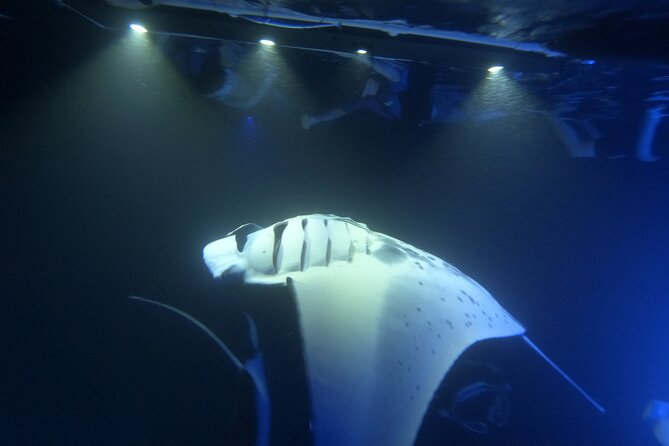
The manta rays are the reason to book this outing, and the most dramatic moments come when they turn toward the lights. They glide with a slow, winglike motion, then roll or loop upward through the plankton. Their mouths open as they feed, but their manner is gentle rather than aggressive.
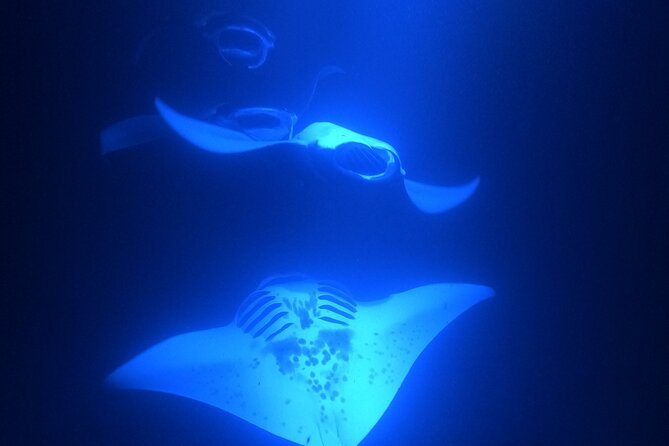
You may see a single large ray pass beneath you, or several rays circle at once. Some accounts describe three rays appearing within minutes, followed later by six surrounding the float. Others describe eight large rays moving close to the group. Those numbers are possibilities, not promises.
The animals can pass within inches, which is thrilling but also a reason to follow the rules closely. Do not reach out and touch them. Keep your hands on the float or in the position the guide gives you, and allow the rays to control the distance.
The lightboards are designed for this purpose. Their blue color can look less powerful than a bright white lamp, but the operator states that the blue lights are effective at gathering plankton. The boards are small, so you should not expect a huge illuminated platform. They do the practical job of creating a feeding area while keeping the canoe and group compact.
The experience is mostly about looking down. You are not promised a scenic underwater reef, daytime fish viewing, or a long open-ocean swim. If your goal is a close look at wild manta behavior, this is exactly the point. If you prefer a relaxed sunset cruise with plenty of room to sit dry, choose a different activity.
The small-group advantage
The group limit is one of the strongest reasons to consider Eka Canoe Adventures. Twelve people or fewer is still a group, but it is far easier to manage than a large boat full of swimmers surrounding one light.
You get a shorter transfer, fewer people sharing the float area, and a more personal setting. The smaller canoe also means less time spent waiting for a large group to load and unload. Several accounts specifically praise the calm, supportive handling of nervous swimmers and people dealing with motion sickness.
That said, small does not mean private. You will still share the canoe and water space with other participants. The lightboard can feel crowded if everyone tries to look from the same angle, and the ocean may be choppy or rainy. One account describes rough water and rain but still found the outing worthwhile.
The crew’s attitude matters here. The strongest experiences involve guides checking on people in the water, explaining safety clearly, and helping with boarding. The company also says its crew is trained to stay engaged and alert. One poor account raised concerns about staff attention, so I would treat crew service as an important but not guaranteed part of any live ocean activity.
Is $127.10 a fair price?
At $127.10, you are paying for a short, specialized encounter, not a full-day boat trip. The price includes the canoe ride, guides, wetsuit top, flotation device, and snorkel gear, including prescription equipment. It does not include towels, food, drinks, transportation, medicine, or gratuity.
The value improves if you care about three things: a small group, a quick ride to the site, and the traditional canoe. A larger operator may offer a lower price, but the setting can feel more crowded. Several accounts specifically considered the smaller boat worth paying extra for.
The price feels less attractive if the weather is poor, the sea is rough, or the rays do not appear. This is an unavoidable risk with wild animals. Operating costs continue even when the manta rays do not cooperate, so there is no refund solely because you saw none.
The manta guarantee softens that risk. If no manta appears, you can return on another evening or during a future Kona visit, depending on available seats. It is useful, but it requires you to have another evening free and to be able to return to the area. If you are leaving Hawaii the next morning, the guarantee may have little practical value.
Who should book this night snorkel
I would put this high on the list for confident swimmers who want one memorable, unusual Kona activity. It suits couples, families with older children, and solo visitors who appreciate a small group and a direct experience.
It also works for people who are nervous but basically capable in the water. The crew can help with the transfer, and several accounts describe patient support for hesitant swimmers. Still, you need to swim and climb the ladder without assistance. This is not a dry viewing tour.
Children must be at least five years old. For younger participants, the real question is not just age but comfort with nighttime water, flotation equipment, and a short ladder. A parent should make that call honestly.
You should reconsider if you have recently had surgery, have mobility limitations, or dislike floating in open water after dark. The operator does not recommend the activity for those situations. Motion sickness medicine is not included, and you need to arrange it yourself.
Booking, cancellation, and useful planning details
The tour is often booked about 23 days ahead, so reserve early if your Kona schedule is tight. Confirmation arrives at booking, and the activity is offered in English.
You can cancel for a full refund up to 24 hours before the start time. Changes or cancellations inside that 24-hour window are not accepted for a refund. If poor weather causes the operator to cancel, you are offered another date or a full refund. The same choice applies if the minimum number of participants is not met.
Opt in to the text updates during booking. The day-of message includes parking and check-in pictures, which can save time at a busy resort area. Bring a towel, and remember that the tour ends back at the meeting point.
Should you book it?
Book this tour if you want a short, close-up encounter with wild manta rays and prefer a traditional canoe with no more than 12 people. The fast ride to the site, included equipment, supportive crew, and return opportunity make it a sensible choice for a first manta outing.
Skip it if you need a guaranteed wildlife sighting, dislike cold or choppy water, or want a long boat excursion. The rays are wild, the water time is limited, and $127.10 is a serious price for about an hour.
For the right swimmer, the gamble is worth understanding rather than ignoring. You are paying for access to a remarkable natural event, not a promise that nature will perform on schedule.
FAQ
Where does the manta ray snorkel tour meet?
You meet at 78-7130 Kaleiopapa Street, Kailua-Kona, Hawaii 96740. The activity ends back at the same meeting point.
How long does the activity last?
The listed duration is about one hour. The operating information says the tour commonly runs about one hour and 15 minutes, with roughly 45 minutes or more of actual snorkeling.
How many people can join the canoe?
The maximum group size is 12 participants.
What equipment is included?
The tour includes a wetsuit top, flotation devices, and snorkel equipment. Normal and prescription snorkel gear are available.
Do I need to be a strong swimmer?
You need basic swimming skills and must be able to climb a short ladder without help. The crew can provide support, but the activity is not suitable for someone unable to manage those requirements.
What happens if no manta rays appear?
Eka Canoe Adventures offers another opportunity on a different evening or during a future visit to Kona, subject to available seats. A refund is not provided simply because no manta rays were seen.
Is the tour suitable for children?
The minimum age is five years old. Every participant must still meet the swimming and ladder requirements.
Are towels, snacks, and drinks provided?
No. Towels, snacks, coffee, and tea are not included. Bring a dry towel and plan your food and drinks before or after the activity.
What is the cancellation policy?
You can cancel up to 24 hours before the start time for a full refund. A weather cancellation or cancellation because the minimum number is not met results in a choice of another date or a full refund.
New snorkel trips around Big Island
- Manta Ray Snorkel in Kailua-Kona with Hot Cocoa★ 4.8 · 115 reviews
- Kona Turtle Snorkel Sail with Lunch and Drinks★ 4.9 · 19 reviews
- Big Island: Kona Half-Day Boat Tour with Snorkeling & Lunch★ 5.0 · 34 reviews
- Hilo: Sea Turtle Lagoon and Black Sand Beach Snorkel★ 4.5 · 119 reviews
- From Keauhou Bay: Snorkel Cruise to Captain Cook’s Monument★ 4.8 · 242 reviews
- Dolphin Watch Snorkel and BBQ in Kona, Big Island★ 4.3 · 21 reviews
- Big Island: Morning Snorkel Sail to Captain Cook’s Monument★ 4.9 · 49 reviews
- From Hawaii: Eco-Friendly Snorkeling Experience with BBQ★ 4.8 · 151 reviews
Big Island Snorkeling Tours, side by side.
Big Island: Kona Manta Ray Snorkel Tour in Keauhou Harbor
Read our review →
Big Island: Captain Cook Snorkel On A Power Catamaran With Lunch
Read our review →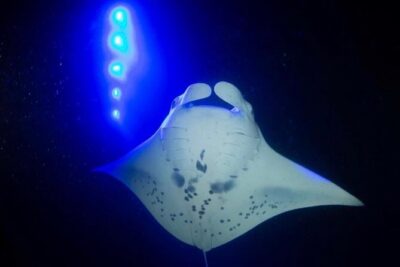
KONA Manta Ray Night Snorkel – FREE re-ride if no Sightings
Read our review →
Kona Snorkel Tour: Captain Cook Reef Snorkel, Dolphin & Sea Caves
Read our review →
Glow of the Deep: Night Snorkeling with Manta Rays
Read our review →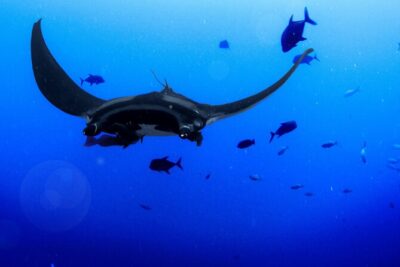
Manta Magic: Small-Group Manta Ray Night Snorkel in Kailua Kona
Read our review →
Kona’s Best Morning Snorkel: Captain Cook & Kealakekua Bay
Read our review →Lists this trip appears on